Friday, January 18, 2008

Drinks in the City

I met up with a friend for drinks after work this evening.

We managed to stumble upon a remarkably pleasant street a short stroll from Bank Station; a most unexpected event. Nice places near Bank? Impossible!

I think I'll be wandering along Watling Street and drinking at Williamson's Tavern again. Most pleasant.

Thursday, December 13, 2007

So *that's* how they work

Have you ever wondered how they make Liquid Crystal Displays?  How they manage to control each pixel separately? How they do this without the millions of separate circuits somehow being visible and ruining the image?

Wonder no more.

It turns out that Indium-Tin Oxide is both electrically conductive and transparent - and so ideal for making LCD screens.

Who knew?!

(Well, not me, obviously).

Why does it always happen on the coldest days?

I arrived home last night to a cold flat. Which was odd, because the super-timer-thermostat (official name) is remote-controlled, battery-powered and rather wonderful... power cuts are not a reason for it to mess up. And I'm not sure there had been a power cut anyway.

So I opened the wardrobe (for this is where the boiler is - don't ask).  A red light was flashing.  This is not usually a good sign.

The display was also blinking: "0.6".

Now, I happen to know that, when the boiler is idle, the display reports the pressure in the heating circuit. I know this because I am boring and read the manual when the boiler (Glow Worm 30CXi) was installed earlier this year.

Normally, it reads about 1.5 - and the instructions on the front say it should be at least 1.0 in normal operation.

I suspected a leak but could see nothing obvious (in other words, the floor wasn't wet and there was nothing oozing out of any of the radiator valves).

So, I used the blue plastic knob to top up the heating circuit and the pressure rapidly rose to 1.1.

The boiler worked for the rest of the night and the flat was warm.   At bed time, the pressure had dropped to 0.9, which I thought odd. The water in the heating circuit was now warm, so I would have expected the pressure to be higher than 1.1, since the 1.1 reading was taken when cold.

I didn't top it up but fell asleep with a sense of foreboding.

Sure enough, I woke up feeling cold this morning. I jumped out of bed (something I never do unless I have an important problem to solve!) and checked the boiler.

Back to 0.6 and a flashing red light. Arghhhh.

There must be a leak.  But where?  Under the bathroom tiles? Under the new stone floor in the kitchen? I hope not. Under the laminate floor? None would be particularly desirable.

Regardless, I topped it up again and called the plumber at 9. He shared my suspicion of a leak and is coming out later.

In the meantime, I pulled some boxes out of the airing cupboard and noticed that carpet was damp.

Hurrah!

The leak is in the airing cupboard.

I'm not sure where in the airing cupboard. But in there somewhere. So it's not as bad as it could have been.

Tuesday, November 13, 2007

Goodbye, Eurostar

I left work a little early today as I had some calls to make, which could be done from home.

I knew that today was the last day of Eurostar at Waterloo so I changed my route so that I could cross the main concourse before heading down to the drain.

None of the press reports have picked up on it yet but I could swear that the singer on their make-shift stage (with at least five TV cameras trained on it) was Lily Allen, attempting to sing "Waterloo Sunset".

Most odd.

Monday, November 12, 2007

When did that happen?

IBM snaps up Cognos. No, not IBM buying Cognos... I know when that happened.

Look at the first line of the report:

"IBM, the software and consulting giant..."

Now, I must admit I don't make a habit of reading news reports about my employer but that is the first time I can recall anybody describing IBM as a "software and consulting" company.  Perhaps the message is starting to get through :-)

Sunday, November 11, 2007

Speed limits and the enviroment

John Redwood (yes, him) blogged today about the A13.  This is the main road from the East End to the M25 and is one that, whenever I hire a StreetCar, I seem to use more than any other.

As he says, it has the potential to be a very useful road but the planners have decided that, for large stretches of this modern dual carriageway, the speed limit should be 40mph.

As I am paranoid about getting points on my licence, I tend to obey speed limits in urban areas and so have tried various techniques to regulate my speed, which is harder than one would expect - primarily due to the fact that the road could clearly safely support speeds much higher.

The technique that works best is simply to drive in a far lower gear than necessary. The increasing engine noise works very well as an alert if one's speed begins to creep up.

As Mr Redwood pointed out in his article, this has the perverse effect of causing more fuel to be burned than is necessary, and probably results in lower air quality for nearby residents I imagine.

There is definitely scope here for the creation of a truly unholy alliance between motorists and environmentalists to campaign for a rule change of mutual benefit.  Bring it on!

Saturday, November 10, 2007

I am Alan Partridge

Apparently, I use "normative" language to promote a "positive" agenda.

The country's best talk show host, Alan Partridge, once suffered from a similar problem:

"Philip Parsons in the Times called the show moribund. Well I looked up moribund in my dictionary..."

In these more modern times, I asked google to help me understand what "normative" and "positive" meant...

And Richard Murphy, my accuser, was completely correct.

Taking the second definition, we get a sense of what he was driving at:

"Refers to value judgments as to 'what ought to be,' in contrast to positive which is about "what is."

He believes that positive language is the preserve of economists and those "on the right who buy the conventional economic model"

Again, he may well be right.

So, the question is: how are those who believe that economics does have valid points to make on political matters - and who believe that outcomes matter more than intentions - to communicate effectively with those who don't?

If the "normative" folk aren't going to switch into "positive" language, the only option is for the "positives" to move in the other direction.

So, readers, what would a sane economic argument look like if it were presented in a normative manner?  Anybody know? Anybody want to take a stab?!

Richard writes to his MEPs*

All nine of them. The mind boggles. How on earth can I have nine of them?!

FOR THE ATTENTION OF:
Claude Moraes MEP
Charles Tannock MEP [REPLIED]
Robert Evans MEP
John Bowis OBE MEP [REPLIED]
Gerard Batten MEP [REPLIED]
Baroness Sarah Ludford MEP
Syed Kamall MEP
Mary Honeyball MEP
Jean Lambert MEP

London

Saturday 10 November 2007

Dear Syed Kamall, Robert Evans, Baroness Sarah Ludford, Charles Tannock, Mary Honeyball, Jean Lambert, Gerard Batten, John Bowis OBE and Claude Moraes,

I read with astonishment today that the EU's accounts have not been signed off by its auditor for the last twelve years - and look likely to suffer the same fate again this year. This is a disgrace, and borders on the corrupt.


Please can you let me know what you are doing to ensure the EU sorts out its accounts?


Furthermore, please can you confirm that you have supported, and will continue to support, those EU workers, such as Marta Andreasen, who speak out on these matters, at great risk to their livelihood?

Yours sincerely,

Richard G Brown

Thanks to "Write To Them" for the technology and "Burning our Money" for the idea.

[UPDATE 2007-11-11 12:38: I've already had three replies! Will update the names as more replies come in. Have also updated affiliations. Labour, Conservative, Lib Dem, Green, UKIP]

optimizin ur it environment

Oh dear.

The lolcats have an alternative take on my employer's homepage...

[via b3ta - where else?]

Thursday, November 08, 2007

A million messages per second

So, we've announced WebSphere MQ Low Latency Messaging...

I've been following the development of this product inside IBM with interest. Many of my clients are in the financial markets and, hard as it may be to believe, data volumes of this magnitude are not in the world of fantasy for them.

I'm looking forward to talking to them about it!

Tuesday, November 06, 2007

Scratchcard players can't compare negative numbers

Good grief.

The scary thing is that this story is completely plausible:

"A LOTTERY scratchcard has been withdrawn from sale by Camelot - because players couldn't understand it.
The Cool Cash game - launched on Monday - was taken out of shops yesterday after some players failed to grasp whether or not they had won.


To qualify for a prize, users had to scratch away a window to reveal a temperature lower than the figure displayed on each card. As the game had a winter theme, the temperature was usually below freezing.

But the concept of comparing negative numbers proved too difficult for some Camelot received dozens of complaints on the first day from players who could not understand how, for example, -5 is higher than -6."

If some people are so numerically challenged that even a scratchcard proves beyond them, then that has to be an opportunity here... I just don't know what it is.

via Chicken Yoghurt

Is this true?

The BBC's Newsnight had a lighthearted piece on "Stella Artois" last night.

I stopped drinking Stella several years ago as it would reliably leave me with the most terrible headaches the next morning. They felt different to the muzziness one might ordinarily suffer from after drinking too much and I didn't like it.

However, that wasn't really the point of this posting...

One of the interviewees in the piece was an anthropologist and she made a remarkable claim. She suggested that, when offered a drink that somebody thinks contains alcohol, they will subsequently act as if it did, even if it didn't. That doesn't sound credible.  Is it?

Thursday, November 01, 2007

Runaway Trains

Apparently a Docklands Light Railway train escaped from a station without a "Passenger Service Agent" onboard.

The Londonist asked what Serco could do to stop it happening again and so remove the possibility of a stranded trainload of passengers on a viaduct somewhere if a train broke down.

They needn't worry. Serco should launch a "Citizen Reserve Driver" programme and sign up thousands of Docklanders.... just think of the sheer number of geeky train passengers who would pay to be allowed to drive a DLR from time to time :-p

Wednesday, October 31, 2007

Don't jump to a solution!

The fantastic "Overcoming Bias" blog has a piece on how we really shouldn't try to solve a problem until we've done as much as we can to understand the problem.

It is astonishing how difficult it is to follow this advice, even when one tries to.

I consciously try to spend most of my initial meetings with clients asking questions, developing my model of their problem and establishing what properties any solution should have. However, it's really hard... one cannot help mentally considering solutions (or solution fragments) and using them to drive the questioning.

Part of this is healthy: many clients have multiple problems or multiple priorities and so driving questioning in a direction where you have a chance of being helpful is clearly useful. However, considering potential solutions gets in the way of developing a deeper understanding of the client's problems because, as the article suggests, the human brain has a very strong tendency to hold onto a solution once it has been conceived.

I found a language to articulate this on a course a few months ago. It was based on Huthwaite's "SPIN Selling" methodology. The course was one of the most useful (and challenging) ones I've been on and was focussed pretty much exclusively on addressing the problem identified in the Overcoming Bias piece. Specifically, a structured model for questioning that allowed one to arrive naturally at the fullest possible statement of the client's problem and needs prior to moving on to solutioning.

This article was timely; it has reminded me I need to make a renewed effort to implement it!

Tuesday, October 30, 2007

Emotional Blackmail

I am on training at our Staines location. It is second only to Bedfont in its difficulty to visit if you live in East London. As the education was a two-day affair, I elected to stay in a hotel overnight.

It was quite an entertaining experience:

  • The internet connection didn't work. I had to be "escalated" to a "second-level" specialist before the wired connection would allow me to get online
  • Hot water came out of the tap when in the cold position. Apart from when it was lukewarm. The handyman couldn't fix it so they delivered me jugs of iced water instead. Had no other guest discovered the problem before or do they just hope nobody will complain?
  • As is common these days, the bill was slipped under my door overnight and contained a list of exciting ways to checkout on the back. Regular readers will know that I don't do queues so I thought I'd try one of them:
    • "Checkout by video". Apparently one can use the interactive feature on the TV to view the bill, enter one's address and checkout. I could view the bill, but there was no option to check out. Wonderful.
    • "Checkout by phone" (available to members of their loyalty programme only). Luckily I was a member and miracle-of-miracles my number was printed on the bill. So I logged on to spg.com (oops... I've identified the chain!). I defy anyone to figure out which link you must click on to check that the address they hold for you is correct. An utterly shocking website.
    • So I was left with no option but to queue up.

Fortunately, the queue wasn't too long and it gave me time to peruse the bill. It seems that Sheraton believe it is acceptable to add items to your bill that you haven't agreed to. This is called attempted theft anywhere else, isn't it? They had added a £1 charge for "UNICEF". As charities go, I suspect UNICEF are one of the good ones. They're almost certainly less corrupt and do more good for the world than the average UN organisation.

However, I prefer to choose where to donate my money and I like to ensure they can claim back the tax on my contribution.

Sadly, asking for a charity donation to be removed from one's bill - especially one for a quid - makes you look mean. Well, I hate being emotionally blackmailed more than I hate being frowned upon so I asked the receptionist if UNICEF would be able to claim back tax (knowing that the answer would be no). She didn't know so I asked for it to be taken off.

So, yes... I'm a coward. I couldn't bring myself to complain about the principle so I let her believe I upset that they wouldn't get enough money from this little act of involuntary altruism. Not my finest hour... but then outcomes do, after all, matter more than intentions.

However, I'm not an ogre and I've been meaning to reassess my charitable giving for some time now (I keep meaning to cancel my Amnesty membership). So does anybody have any ideas of a charity that I should divert my Amnesty donations to (with an uplift to account for my miserly behaviour this morning...)?


[EDIT 2007-10-30 13:56 - mino typos corrected]

Sunday, October 28, 2007

Books

Roo (many, many weeks ago) asked what I thought of Tim Harford's "The Undercover Economist".

Short answer: I loved it.

I first heard about it on a "Radio Economics" PodCast, where he read the introduction and the first chapter

The rest of the book was equally enjoyable.

The introduction sticks in my mind, however, because it was really a modern reworking of "I, Pencil". That is: not one person in the world knows how to start with raw materials and end up with pencil.

Milton Friedman explained it well:

Maps of London

You can never have enough.

via Diamond Geezer (probably... this sort of stuff usually originates on his blog.... ah yes.... here)

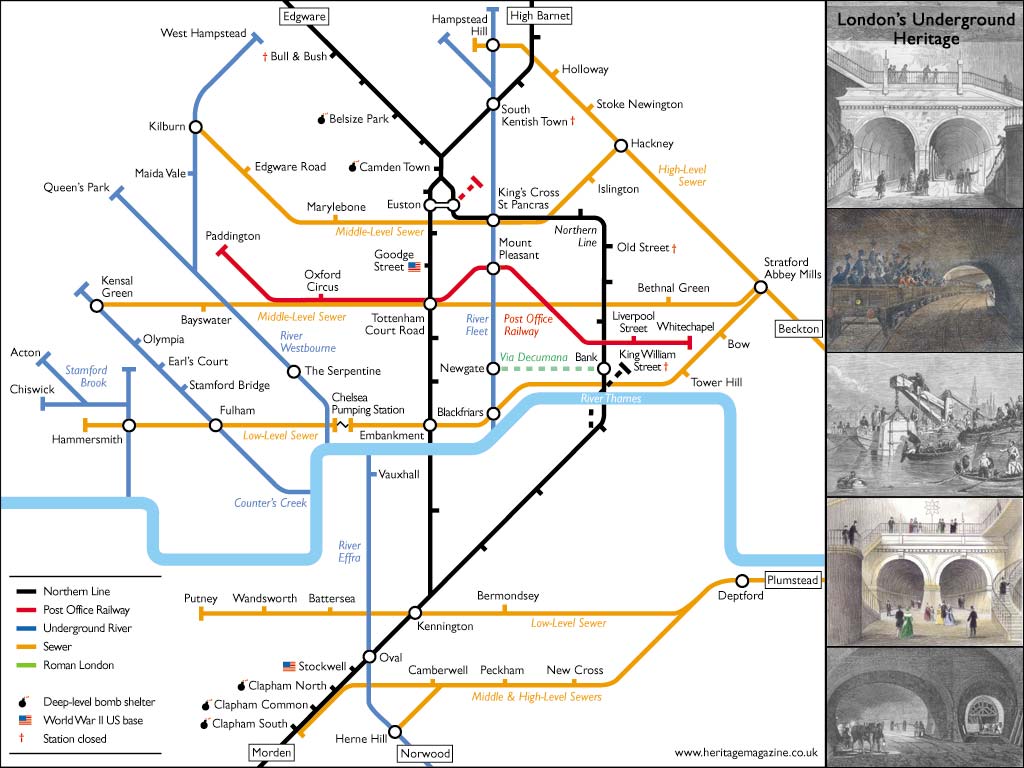
Underground Waterways and unexpected tunnels

Overground Waterways

The underground map is interesting.... it suggests the Northern Low-level sewer heads inland east of Tower Hill to meet the mid-level sewer at Stratford via Bow.

So where does the effluent of Docklands go? (And no... the answer is not that the effluent of Docklands is recycled here; that would be too extreme. They merely recycle the effluent of Westminster)

Saturday, October 27, 2007

The Economics of Ant Colonies

Attentive readers (all three of them...) may have noticed my blogging has been intermittent to non-existent of late. I've been busy.

Busy learning about ants.

Well, busy working and decorating and stuff. But I did also happen to listen to a fascinating PodCast about ants. And I suppose I could have blogged during that hour had I not been listening to the recording. The pOdcASt (how do you capitalise it?) was about ant colonies and how order emerges even though there is no leader to direct things. It made me think back to my holiday in Provence in July. On holiday, I spent many, many hours on the sun lounger (under the umbrella) reading and watching the ants carry away the various crumbs we had dropped. My ant fascination was such that no fewer than two friends who were on that holiday bought me ant-related products for my recent birthday.

Anyway, the podcast was very interesting and I recommend it.

I need some investing help

Readers, I am ashamed to admit that, having failed to find a suitable investment target in August (see here), I have still not invested the money sitting in my selftrade account. Worse, I have since opened a trading account in the US and have failed to invest that money either.

Arghhh....

I know one should not be afraid to hold cash in uncertain times but this is getting ridiculous.

If I believe that stock markets in general (in the UK and US, at least) are probably over-valued, I'm torn between spending some considerable time identifying individual stocks I regard as under-priced (like I did, by accident, with Morrison's - although not immediately...) or investing in a different asset class or using a different approach. Which? I'm not keen on anything that requires active management... so no short term shorting strategies, etc.

Perhaps I should just put it all under the bed.

Just too easy

I make a point of reading The Guardian on Saturdays as I believe it is important to read opinions with which one disagrees. Its economic illiteracy and the sheer lunacy of some of their letter writers makes my Saturday mornings highly amusing, if somewhat infuriating.

I swear they include articles whose sole intention is to push me over the edge and vow never to buy the paper again.

They went one better today and included a whole supplement. Labelled "The Green Guide", it was an uncritical, sanctimonious bucket of propaganda masquerading as journalism.

At least, that's what I thought it would be before I opened it.

Against my better judgement, however, I retrieved it from the bin (landfill-destined, naturally). It turns out my prejudices were unfounded. It was actually just a large advertising supplement, littered with adverts targetted at the credulous fools who actually believe the lies we're being fed about the environment at present.

It was gratifying to realise quite how many companies have figured out that there's good money to be made from these people. Good for them!

(And the best thing is, I get to put it in the trash for the second time!)

Monday, October 22, 2007

The housing market is doomed!

Seen from the DLR: six liveried Volkswagen Beetles parked outside Atkinson Mcleod's Leman Street Office. Why aren't they showing buyers around and chasing after sellers? The end is nigh!

(Alternative explanation 1: the estate agents were having a meeting

Alternative explanation 2: Monday early afternoon is always slow and I only noticed the cars because I normally leave work somewhat later in the day)

Tuesday, September 04, 2007

Alternative Routes to Work

My regular readers would find any comment on the current tube strike tiresomely predictable so I'm going to talk about something else instead.

Being unable to get the Waterloo and City line from Bank, I went to Tower Gateway this morning and caught the RV1 bus to the South Bank instead.

I had a seat for both legs of the journey (the Tower Gateway services are always less congested than the DLR's Bank services) and being above ground for the whole journey made a refreshing change.

It took twenty minutes longer than ordinary but I think I got off lightly compared to some. 

Tax "Justice", revisited

Richard Murphy was good enough to respond to my observations on the Tax "Justice" phenomenon. He addressed the three points in order and I will do the same here. As in my original post, I try to concentrate on the argument and not the person. I ask any commenters to do the same. 

"Perspective on whose money it is"

As Tim Worstall has commented, the rebuttal to my first point was eye-opening.  Murphy chose to mount a rousing defence of the concept of a state as part of his answer. I'm not sure why he did this because my point was about the mindset of those who propagate notions of "Tax Justice" but the argument was interesting, nevertheless.

The key passage is this:  (my formatting)

This system also corrects the very obvious failings of the market system. That system could not ever provide a socially optimal outcome in any society in reality because so many of the pre-conditions of it doing so do not exist. Those that do not exist include:

  • Perfect knowledge of the future;

  • Perfect knowledge of all products and services available in the market now, and their prices; ...

I could add many more, all of which are required[1] to make markets produce successful outcomes and the absence of any one of which will result in an imperfect result. The degree of imperfection cannot be predicted, but will tend towards monopoly exploitation[2]. This is why the State must intervene to protect those whom the market would otherwise both fail and exploit.[3]

Taking the highlighted points in turn, (1) is probably the most problematic. Murphy confuses sufficient conditions with necessary conditions and so has set up a straw-man (seemingly unwittingly).  Unlike Murphy, I am not a trained economist. But I am a trained mathematician; the difference between "necessary" and "sufficient" tends to be quite important.

He then makes an unsupported claim (2) about what bad things might happen in the absence of one of the sufficient conditions and then, inexplicably, claims (3) that the solution to imperfect knowledge is to create an institution which cannot hope to accumulate the missing information.

"Is poverty created - or escaped from?"

Apart from reiterating his flawed understanding of economic theory, Murphy doesn't really address the substance of my core argument (that poverty isn't created; wealth is) and so there's not much more I can write on this one

"Anyone who disagrees is greedy"

Murphy's response to this is to assert:

The first is that the whole basis of mainstream economic thinking is that greed is both acceptable and desirable. This is what the maximisation of self interest that it promotes means, at least to many who seem to simplistically buy into this economic vision.

This is, of course, a very cleverly-constructed straw-man. He chooses a narrow definition of "self-interest" and then suggests that it is my definition. 

Quite apart from the fact that it isn't my opinion, it doesn't really address the point.

When it comes to taxes, there are three cases:

  • You are unambiguously liable to a particular tax
  • You are unambiguously not liable
  • There is doubt about whether you are liable or there is a divergence between the law-as-written and the supposed intent of those who wrote it

Clearly, most (all, I hope!) of us agree that we should pay demands that fall into the first category and I'm sure not even Murphy pays demands that fall into the second. So the only point of disagreement is the third.

Now, if you do not believe government does a good job of spending money, it is illogical voluntarily to pay more than is required (and let's be clear, that's what is being asked of us; if it wasn't voluntary, there would be no debate as it would fall into the first category!) This does not make one greedy.

So, I am grateful for Murphy's response (truly - even faulty arguments can force one to clarify one's thinking) but I'm not convinced he's supported his assertions.

Monday, September 03, 2007

Political Compass Cheat Sheet

The discussions on Roo's post about the Political Compass made me think. Some of the questions are clearly ones of opinion. But others, to my mind, have a right or wrong answer.

Here are some examples:

'Controlling inflation is more important than controlling unemployment.'

I thought the lesson of the 1970s had been well and truly learned. Perhaps not.

' "From each according to his ability, to each according to his need" is a fundamentally good idea. '

It might be a fundamentally nice idea. That doesn't make it a good idea.  If you truly believe that it is a good idea, you cannot simultaneously believe in the power of incentives, the tragedy of the commons, the free-rider problem or any of the other insights of economics. In other words, it is possible, strictly, to agree with the statement but to do so logically places you far outside the mainstream.  "Intent" is not the same as "outcome" and it is logically inconsistent to agree with statements you believe to have good intent if you know the outcome will be bad.

'Land shouldn't be a commodity to be bought and sold.'

Again, one may not like the idea of property or of property rights. However, to agree with this statement is to call for a complete abandonment of our economic system. That's fine; some people really do believe they know better and think the miracle of the last 500 years (humanity's discovery of how to escape from poverty) could have been achieved better in another manner.  But glibly to agree with such a statement without acknowledging its implications is of questionable rigor. 

And just in case anybody thinks I'm merely defining my opinion as the truth, here's an example where I do believe opinion comes into it:

'No broadcasting institution, however independent its content, should receive public funding.'

I have strong opinions on this one but I accept that some people genuinely do believe applying a regressive tax on the poor (as happens in the UK) to fund a broadcaster is acceptable. I find such people are immune to (my) argument and have, reluctantly, concluded that this one truly does seem to be a matter of opinion!

Sunday, September 02, 2007

Should we do anything about climate change?

John Llewellyn, Senior Economic Policy Advisor at Lehman Brothers, wrote an article in today's Observer discussing whether we should act on climate change.

He seemed to conflate the question of whether it is happening with whether we should do anything about it. I don't think this is helpful.

Dear Dr Llewellyn,


I read your article on climate change in today's Observer with interest.


Your categorisation of people with an opinion on the topic was probably fair (although I didn't recognise myself in any of them!) but I can't help thinking you missed a key point: the question of whether human-caused climate change is occurring is different to the question of what, if anything, we should do about it. Crucially, the first question is one for scientists whereas the second question is one, primarily, for economists.


If we grant that climate change is occurring, it does not follow that we should do anything about it. 1% of GDP, spent every year for a hundred years is a great deal of money and the power of compounding is such that world GDP in 100 years would be materially lower than it otherwise would have been. Therefore, it is necessary to show that the negative effects of climate change are sufficient to outweigh this massive reduction in the living standards of the people of the future (compared to what they would have been). In other words, arguments based on the idea of doing something "just in case" only work if the negative consequences of doing something are also considered.


Yours sincerely,

Richard Brown

At the risk of my blogging today turning into a link fest to the Portuguese scandium monopolist, I must confess that this argument was stolen shamelessly from him.


[EDIT: Do read kyb's post in the comments. As he points out, even if climate change isn't man-caused, there may still be a case for doing something about it. I may not agree with that but it makes the need to separate the two issues crystal clear]

Tax "Justice"

A week or so ago, I commented on AccManPro that I disagreed with pretty much everything that appears on the taxresearch.org.uk blog. One of the commenters there asked me to expand on this and to explain why I thought the ideas being discussed were wrong. I sense that I was being baited but what the heck....

I was going to write a long piece on the ideas behind "tax justice" and the silliness intrinsic in it. However, I found it getting unnecessarily wordy so I thought I'd highlight examples instead:

1) The primary fallacy seems to be the tendency to start from the perspective that your money is the state's - and that you should be allowed to keep what is left after the state has taken what it wants. This perspective is then used to argue that arranging one's affairs to reduce tax liabilities is somehow "taking" money from others. To see why they can think this, you must put yourself in their heads. They start with the assumption that the £100 you just earned is the state's. If you pay 41% tax on it, you're allowed to keep £59 of it - they'll give you the £59, in other words. However, if you find a way to make the tax liability 40%, say, then the state would have to give you £60 back. You've just been given an extra £1. And here's where it gets screwy... they seem to be claiming that this £1 has been funded by somebody else. Yes. That truly does seem to be the thought process. The idea that the original £100 was yours to start with seems completely to escape them. Bizarre.

2) The headline on this piece on a different website related to tax justice shows the "interesting" level of economic literacy prevalent in this field. There seems to be a belief that poverty is "caused" and that, naturally, it is somebody's fault. Sorry, folks. Poverty is not "caused". It is the natural state of humanity. The story of the last five hundred years has been our discovery of how to escape it by creating wealth for ourselves and for others. It is clearly true that many, many people are doing a lot less well than we would like. However, any analysis that starts with the assertion that this is somebody else's fault is not going to lead to anything sensible.

3) Anybody who disagrees with the tax justice crowd is "greedy". See this comment to somebody upset by the impact of inheritance tax. One can argue about the merits of inheritance tax or explain why one believes a tax paid only by the stupid and the unlucky is morally justifiable but note that this isn't what happens. Instead, the ad hominem is deployed. Lovely.

I should point out that I am sure the tax justice crowd are well-meaning, pleasant people. Indeed, I am sure I could spend an enjoyable evening in the company of such people (and I am sufficiently polite in person that I'm sure they could tolerate me!). However, I don't think they would manage to persuade me that this movement is one to which I should subscribe.


I notice that Tim Worstall also sometimes links to taxresearch to take issue with them. Well worth reading.

[EDIT 2007-09-02 19:08 Corrected typo and added link to Tim Worstall]

[UPDATE 2007-09-03 17:23 Richard Murphy has responded. http://www.taxresearch.org.uk/Blog/2007/09/03/tax-justice-2/ ]

I'm surrounded by woolly liberals.

Gah. What's wrong with some people?!

Roo admits to being a greeny 1972 Labour-type (sort of)

And kyb is almost as bad.

I need to start tracking some different bloggers :-p

This is more like it:

I can only conclude that my mission to educate the world in the correct way of economic thinking (i.e. mine!) is not yet complete.


[UPDATE: Roo is tracking people's results in one place. Seems Uncle Milt and I would have been soul-mates - http://rooreynolds.com/2007/09/02/political-compass/]

We should ban the sun to protect lightbulb manufacturers

The EU's ridiculous attempt to make us all poor by banning cheap, safe incandescent lightbulbs and forcing us all to buy mercury-filled, harsh fluorescent lamps was bad enough.  That they then placed import tariffs on the energy-saving bulbs is beyond farce.

A commenter on "Devil's Kitchen" suggested that the reason might be because the EU's trade commissioner is an economic illiterate and suggested sending him some pointers.

So I did.

Commissioner Mandelson
DG Trade
European Commission
200 Rue de la Loi
B-1049 Brussels
Belgium

Dear Commissioner,

I was bemused by recent press reports that the EU is simultaneously banning incandescent lightbulbs and placing import tariffs on low-energy replacements being sent from China.

If the Chinese wish to send us cheap goods, we should open our arms and accept the gifts with gratitude. I resent your efforts to keep the people of Europe poorer than we otherwise would be.

I am enclosing a copy of an essay, written in 1845, by French economist Frédéric Bastiat. It is as relevant today as it was then and I hope it proves illuminating.

Yours sincerely,

Richard G Brown

http://bastiat.org/en/petition.html

Tuesday, August 28, 2007

This could be my last ever visit to the US :-(

I'm in New York this week on training for work. Sadly, the venue is about twenty miles outside New York City and it's looking unlikely that I'll get the opportunity for a trip into town but the venue itself is pretty good.

However, when I arrived at Newark, I queued for about half an hour to go through the passport check and was then somewhat perturbed when the agent declined to stamp my passport and, instead, called "Escort!" and had me shipped into a separate room, where I had to wait for another half an hour until another agent entered my details on to a computer and spent five minutes typing away.

Eventually, I was told I could enter the country.

It appears that somebody with my name - or something similar to it - is on a list of baddies. I find this somewhat hard to believe... I mean do you know anybody else with "Gendal" for a middle name?!

This also happened to me when I was here in March.

I asked the agent this time what I needed to do to ensure this doesn't happen again. Apparently, there is nothing I can do and this will happen every time I visit in the future.

I think I'd rather just not come again.

Friday, August 24, 2007

Dance, Monkey. DANCE!

Alex Tabarrok has a great idea: make those who seek to exercise power over us participate in a game show so they can prove themselves before we're saddled with them.

It's interesting to speculate on how the UK's leaders and would-be-leaders would perform in the games Alex suggests.

Coase it Out: Presidential candidates have 12 hours to get a bitterly divorcing couple to divide their assets in a mutually agreeable manner.  (Bonus points are awarded if the candidate convinces the couple to stay together.)

I suspect David Cameron would do better at this than Gordon Brown. As one of Alex's commenters points out, however, giving bonus points for convincing a couple who hate each other to stay together may not be optimal. However, it would be precisely the skillset needed to bring a treaty negotiation to a close

Spot the Fraud:  Presidential candidates are provided with an economic scenario (mortgage defaults are up, hedge funds are crashing, liquidity is tight).  Three experts propose plans.  The candidate must choose one of the plans.  After the candidate chooses, the true identities of the "experts" are revealed. One is a trucker, another a scuba diver instructor and the last a distinguished economist.  Which did the candidate choose? 

My take on this is that Gordon Brown would know the right answer and David Cameron wouldn't. However, and this is the problem with Alex's scheme, that doesn't mean he would do what he knew to be the correct thing!

Monday, August 13, 2007

Something interesting in the *hardware* space? Whatever next!

I struggle to get excited about computer hardware. I work in middleware; the rest is mere detail. UNIX? Windows? RISC? Partitioning?   BORING!!!

But, then, every so often something comes along that seems genuinely interesting.

If Mark is for real (and he doesn't have a track record of just making stuff up), it would seem that it is now possible to migrate running workloads from one physcial machine to another.

I have to admit that such a thing would, indeed, be rather worthy of comment. I may even allow myself to emit a little "wow" sound.


So there. I did it. A post about hardware.

Sunday, August 12, 2007

Some investment recommendations, please

Readers, it may have noticed that there is some volatility in world markets at present. Stock markets have tumbled, credit markets have seized up and many people seem to be worried.

Excellent.

Things have got a little cheaper and there are probably some good buying opportunities.

I will probably restrict myself to purchasing shares but could be talked into investing in a fund or buying a different asset class if it could be done easily through www.selftrade.co.uk as I don't want to have to open up an account somewhere else.

Given that I'm employed in the IT sector and sell primarily to companies in the Financial Services Sector, my preference is to avoid increasing my exposure to them. Any other area would be considered, however.

Any ideas?

Wednesday, August 08, 2007

It turns out I asked a good question!

Well, well, well.

My question about optimal locations to hold a party turns out to have been harder than I expected. As always, my super-intelligent commenters made some good observations (read the comments on the other thread).

Taking the biscuit, however, was my colleague Lee Hollingdale.  He decided that, whilst theory is nice, nothing beats a good bit of empiricism: he knocked up a program so that I could experiment for real.   Wow.

Here are the results of Lee's program.

Firstly, let's look at the "two friend" case.  The brighter dots represent points of minimum "total distance travelled". As we see, our prediction that it would be the entire line between the two friends was correct:

Photo Sharing and Video Hosting at Photobucket

 Now, if we add an extra point - along the same line, something interesting happens.  The optimal position is now just that single new point:

Photo Sharing and Video Hosting at Photobucket


If, instead, we move the third friend to somewhere not on the line, but still close, it seems that their house is the best place to hold the party:

Photo Sharing and Video Hosting at Photobucket


But if they move out into zone 6, it rapidly becomes clear that their house is not appropriate (quite right, too).

Photo Sharing and Video Hosting at Photobucket


And now, if we pretend to have loads of friends, the optimal point (and there is just one point) can be seen:

Photo Sharing and Video Hosting at Photobucket


So, it does appear that two friends is the special case but the "hold the party at the third friend's house" result is not one I was expecting


Thanks Lee!

Monday, August 06, 2007

A mathematics challenge

Six of us were having dinner in a restaurant in on Friday evening. We had travelled from different parts of London and had travelled different decisions.  I started thinking about where we could have met to minimise the total distance we travelled.

In other words, given a set of friends and their starting points and assuming we measure straight-line distances - ignore roads and hills - there must be at least one point that requires the least total distance to be travelled in order for everybody to meet.  Furthermore, there may be more than one such point.   As an example, consider just two friends: any point on a straight line between them would be a meeting point that satisfied my requirement that the total distance travelled is miminised.

My question is: given an arbitrary number of friends and their starting points, what can we say about the set of points representing minimum total distances travelled?   In particular, will its points necessarily be connected to each other or could they be dispersed?

Monday, July 30, 2007

Intelligent Finance "Systems Update". Yeah, right.

Oh dear.

Intelligent Finance is offline (try logging on or accessing your account via phone).

They've no doubt encountered a nasty problem (who knows what it is; it could happen to anybody. The core failure probably isn't even their fault and I feel for the technicians who are, no doubt, running around at high speed desperately trying to get the site back on line).

However, it's not acceptable to describe an unexpected failure as a "systems update".

Face it, guys: you're offline and you didn't plan to be. Don't treat your customers like idiots. Tell us that there's a problem (and that you're working on it) and we'll understand. These things happen.

Persist with the "update" charade for much longer, however, and I'll be taking my business elsewhere. I don't expect my bank to mislead me.

Some honesty, please.


(I'm not the only one to notice that they're down).

Sunday, July 01, 2007

Olympic Park

We learned, via Diamond Geezer, that the site of the London Olympics in 2012 will be closed for five years from tomorrow.

This meant that today was a perfect day for a walk in the "country"! (if you ignore the weather)

So, eight of us met at Bromley-by-Bow tube at noon and walked along the various waterways that mark the rough perimeter of the southern-half of the site.

We then headed back to the real river down the Limehouse Cut and had lunch in Wapping.

Wednesday, June 20, 2007

Traffic Jam on the Thames

The Thames was busier than I had ever seen it before on Saturday.

Tens upon tens of boats all manoeuvring in and around Limehouse reach, including massive barges being rowed.

Rather exciting to watch, but very odd.  You can just about make out one of these strange rowing boars in the centre-left of the picture.

The reason my blogging has been light...

A fridge and wine cooler in the bedroom...

Photo Sharing and Video Hosting at Photobucket

... a hole where the kitchen used to be...


Yes... it can mean only one thing: the builders are in!

At least things are moving forward, though.... the tiling and flooring is beginning to get going now:

Not long now (allegedly).

Monday, June 11, 2007

How to be a manager when you have no power

Like many companies, the one I work for is heavily matrix-managed: somebody is responsible for worrying about a particular software product line's sales to all customers in the UK... somebody else is worried about sales of all software to financial services customers... somebody else is worried about how much revenue - across all the things we sell - we get from a single set of named customers. And so on.

In such a world, it clearly isn't possible for each of those people to own all the dedicated resources they need in order to meet their objectives; they have to rely on team-work, cooperation and in helping others see how their interests - and those of our clients - can be aligned.

I was therefore interested to read this post about being on the management board for a residential development by David Lorenzo.

I emailed him to suggest that his experiences of having responsibility without total power were not unique and he posted a response here.

Clearly, the problem of running a condo management board is different to that of running a sales organisation but, it's a nice reminder that the difficulties of running a complicated large company are sometimes similar to the problems faced by much smaller organisations.

Stress!

Work starts on the new kitchen today...

Dust.... capped gas pipes.... demolished walls.... exposed wiring.... the ever-present fear that they'll ignore what I've told them and just build whatever they feel like.

I can't wait to be back in work tomorrow.